
Introduction
Ensuring your PC fans are active and efficiently managed is key to optimizing your computer’s performance and prolonging the life of its components. When electronic components generate heat, it can lead to reduced performance or even failure if not dissipated effectively. By maintaining your PC fans in optimal working condition, you can achieve lower temperatures and maintain your system’s efficiency. This guide will provide detailed steps on how to turn on and control PC fans efficiently.
Importance of Proper PC Fan Activation
The role of PC fans extends beyond simple cooling. They are essential for system stability, preventing components from overheating and causing damage. An efficiently cooled system can operate at peak performance, with the fans helping to dissipate heat from the CPU, GPU, and other vital parts. Understanding and activating your PC’s cooling system properly can make a significant difference in both performance and longevity.
To fully grasp fan usage, it’s important to understand how different types of fans interact with PC components. Knowing these interactions allows you to troubleshoot effectively and optimize your fan settings thoroughly.
Understanding Your PC Fan Setup
Your PC likely contains several types of fans, each with specific purposes:
- Case Fans: They maintain a steady flow of air through your case, crucial for expelling heat generated by other components.
- CPU Fans: These are attached to your CPU cooler and are responsible for removing heat from your processor.
- GPU Fans: Fixed on your graphics card, GPU fans are vital for cooling during graphics-intensive tasks.
Identifying your PC’s fans and understanding how they contribute to the system’s cooling is fundamental. Proper installation and sufficient power supply are essential for their effective functioning.
Accessing BIOS/UEFI for Fan Activation
To gain comprehensive control over your PC’s fans, accessing the BIOS/UEFI is a necessary step. Here, you can configure fan settings for optimal cooling:
- Enter BIOS/UEFI: Restart your computer and press the designated key (such as Delete, F2, or F10) during startup.
- Locate Fan Settings: Navigate to the fan control section found under hardware monitoring.
- Adjust Fan Speed: Most interfaces allow you to set fan speeds based on temperature thresholds. Balance higher speeds for heavy loads with quieter operation under lighter ones.
- Save and Exit: Ensure that all new settings are saved before exiting the BIOS/UEFI.
Correct configuration here can maximize cooling efficiency, balancing noise and performance.
Using Software to Control PC Fans
For those who prefer not to delve into BIOS, fan control software offers a more user-friendly approach. It allows you to monitor temperatures and adjust fan speeds accordingly.
- Popular Fan Control Software:
- SpeedFan: Offers detailed monitoring of voltages, fan speeds, and temperatures.
- MSI Afterburner: While primarily a GPU overclocking tool, it provides extensive fan control capabilities.
Installation and Setup Guide
- Download and Install: Get the latest version from the software’s official site.
- Run the Software: Launch it and review the interface to get comfortable with its options.
- Configure Fan Profiles: Create custom profiles that adjust fan speeds based on temperature readings.
- Monitor and Adjust: Keep an eye on system temperatures and tweak settings for optimal results.
Software solutions allow you to control cooling without needing to access BIOS settings, enhancing precision.
Manual Methods for Ensuring Fan Operation
If software solutions aren’t meeting your needs, or if issues arise, manual checks are crucial:
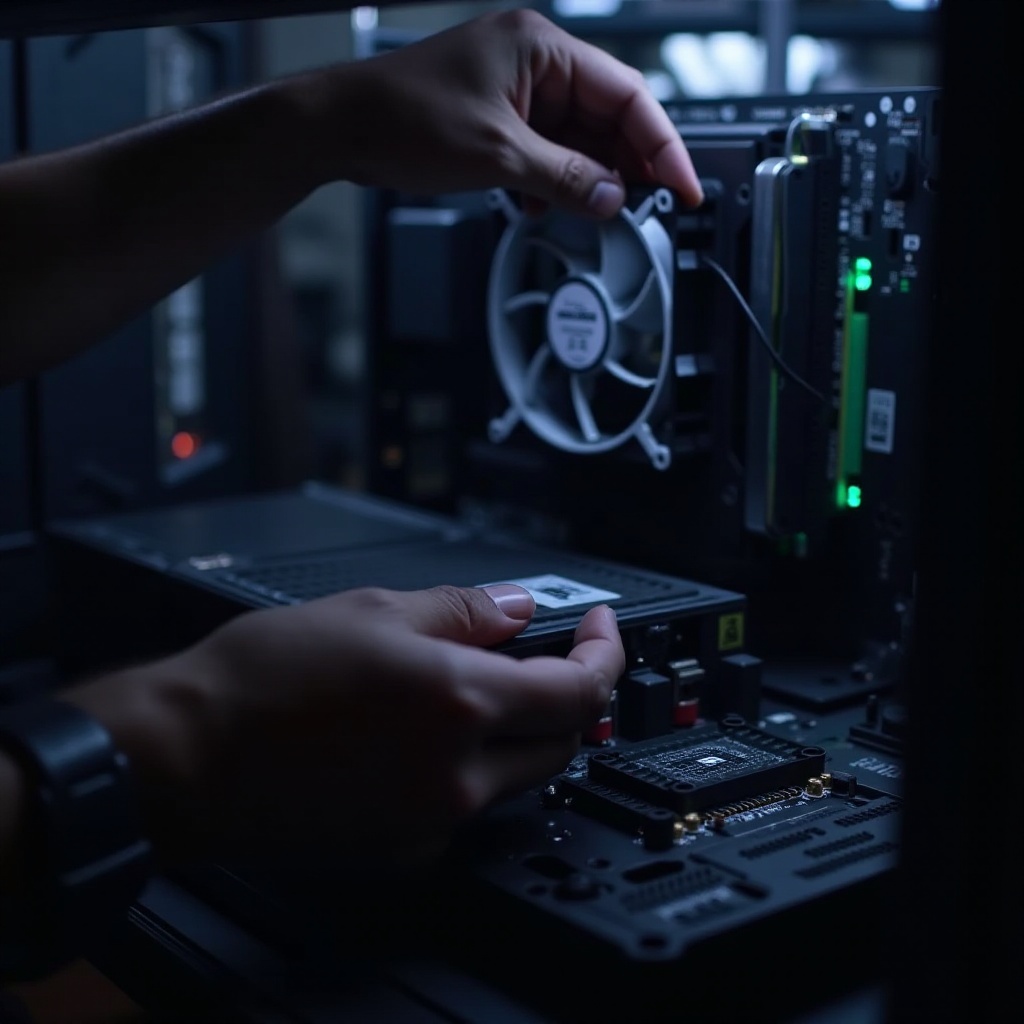
- Physical Connection Checks: Open your PC case and ensure all fans are firmly connected to the motherboard or power supply, depending on their design.
- Power Supply Inspection: Verify that your PSU is of adequate capacity for all connected components, including fans.
Troubleshooting Common Fan Issues
Even with proper settings, problems might still occur. Here’s how to address common issues:
Fan Not Running: Possible Causes and Fixes
- Check Connections: Confirm that all fan cables are secured.
- Inspect Fan Blades: Ensure nothing is obstructing fan movement.
- Replace Fans: If fans still don’t operate, consider replacing faulty ones.
Noise Reduction Techniques
- Clean Dust and Debris: Regularly clean fans and case interiors to avoid dust build-up.
- Use Anti-Vibration Pads: These pads help minimize noise by reducing vibrations.
Conclusion
Turning on and managing your computer’s fans is vital for maintaining an efficiently operating system. Ensuring your fans are properly active and well-configured helps keep your PC cool and quiet. Regular monitoring and adjustments not only safeguard your components but also enhance their performance and longevity.
Frequently Asked Questions
How do I know if my PC fans are working?
You can check fan operation through BIOS settings or fan control software. Alternatively, observe airflow or listen for fan sounds.
What should I do if my fan is making unusual noises?
Examine fan blades for obstructions and clean out dust. If the noise persists, replacement may be necessary.
Can I control fan speed without accessing the BIOS/UEFI?
Yes, fan control software like SpeedFan or MSI Afterburner allows speed adjustments without BIOS access.